Imagining Artist Methods
Toulouse-LautrecAt the Moulin Rouge · 1892–95All 16

A studio guide · Montmartre, about 1894–95

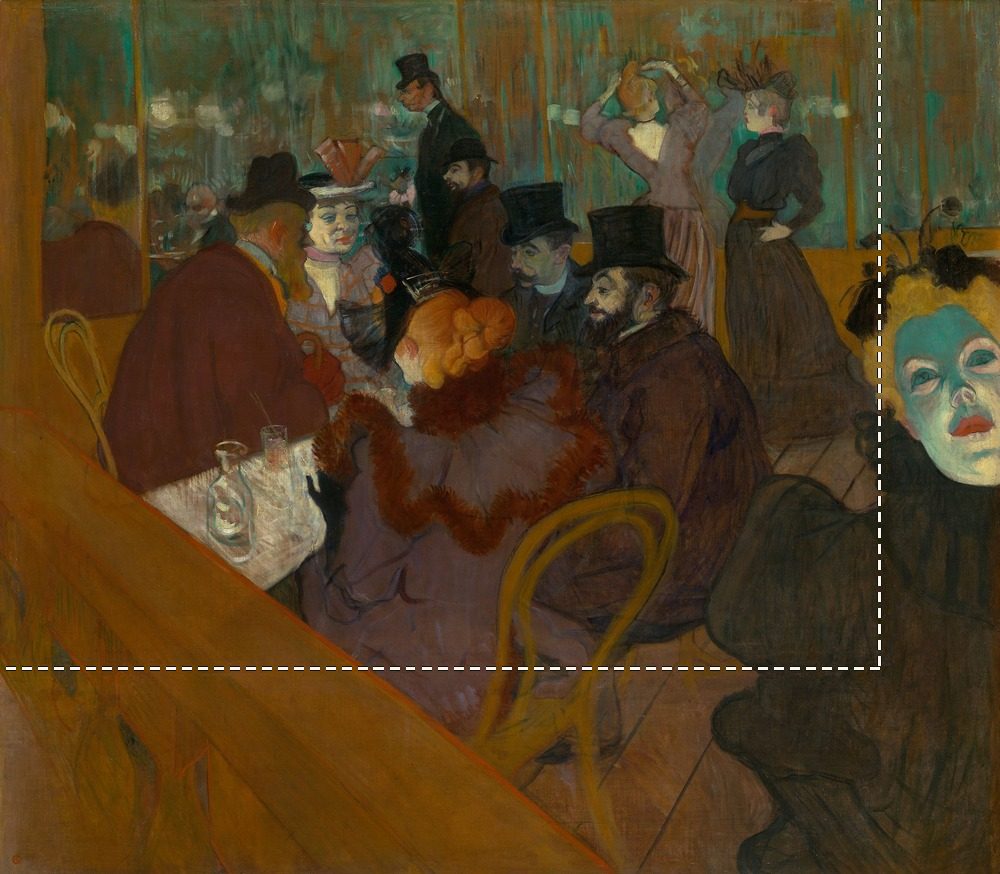
At the Moulin Rouge, cut and rejoined

Imagine you are Henri de Toulouse-Lautrec, back on canvas after years of painting on cardboard, putting your friends at a table in the Moulin Rouge. This guide follows what your process would have been, from a ground tinted like cardboard to the green face at the edge, and then what happened to the picture after your death.

An examination at the Art Institute of Chicago in 1985, published by Reinhold Heller in 1986, showed how the canvas was cut and rejoined. No analysis of its pigments or underdrawing has been published, so the painting steps follow your known practice. Each chapter opens with a note on what its evidence is. The slider steps through eight stages; stages 1 to 5 and 7 are AI reconstructions.

Rejoined, by 1914

Stage 8 of 8

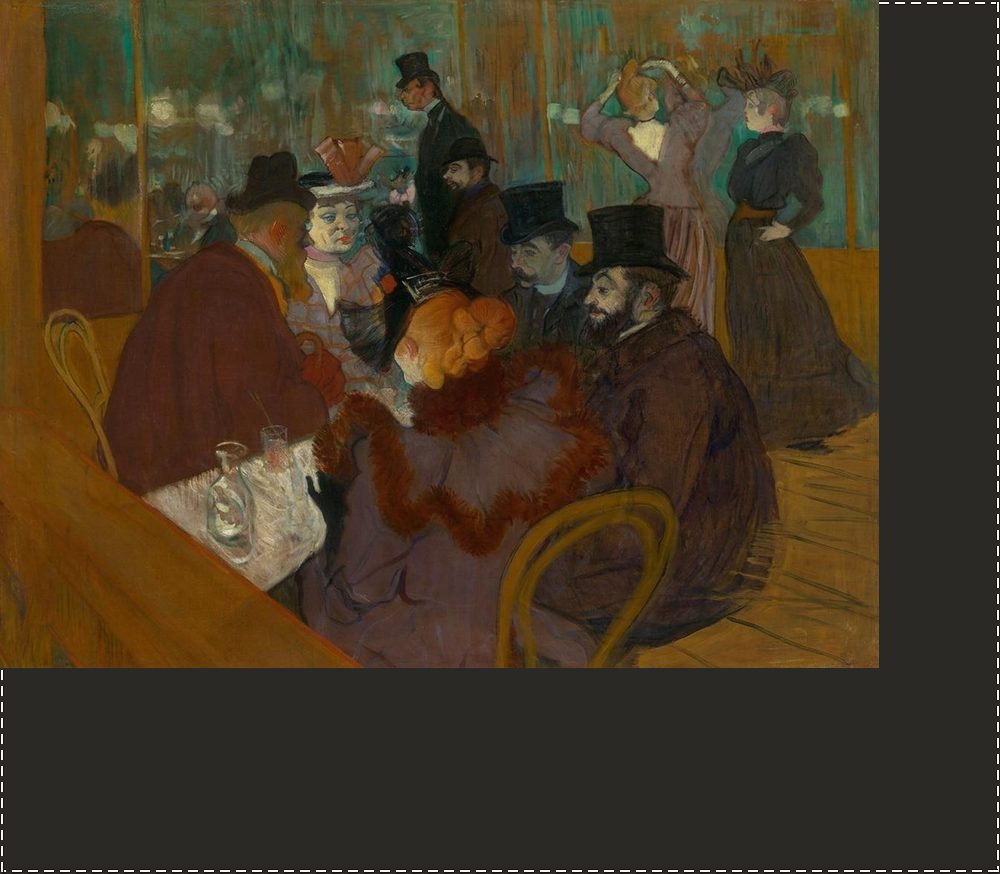
Both pieces lined onto a new canvas, the rectangle shifted down about an inch. The dashed line marks the join, approximately. This is the painting today.

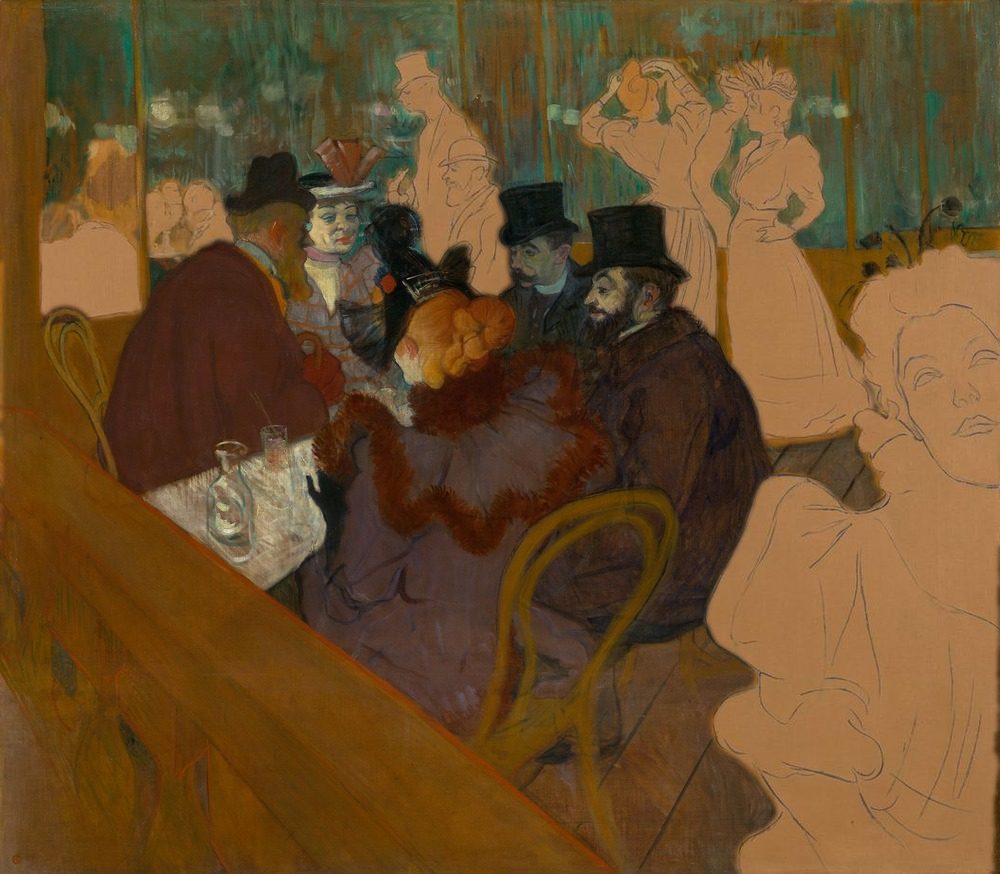
Henri de Toulouse-Lautrec, At the Moulin Rouge, 1892–95. Oil on canvas, 123 × 141 cm. Art Institute of Chicago, Helen Birch Bartlett Memorial Collection. AI-generated Stages 1 to 5 and 7 are reconstructions made with Prodia from this painting; in stage 8 the dashed line marks the join, approximately.

Your training

EvidenceDaniel Catton Rich's 1949 study of the painting and standard biographies. Bonnat's remark reaches us second-hand, through Rich.

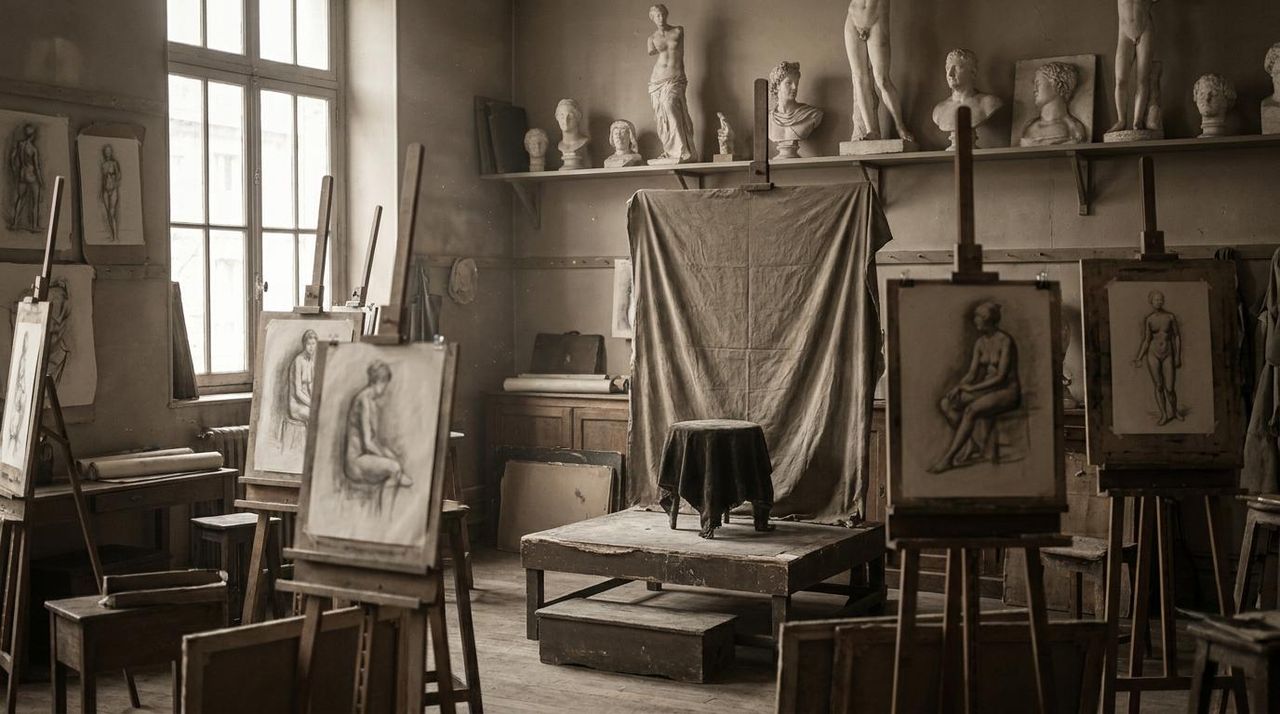
AI-generated reconstruction: a Paris teaching studio with rows of easels holding charcoal figure studies, a model's stand and plaster casts, under a huge north window.
AI-generatedA Paris teaching studio of the early 1880s, like Bonnat's and Cormon's.

You are Henri de Toulouse-Lautrec, born at Albi in 1864. As a boy you are encouraged by the animal painters René Princeteau and John Lewis Brown.

In 1882 you enter Léon Bonnat's studio in Paris. He is said to have found your painting not bad and your drawing atrocious. You move on to Fernand Cormon's studio, where you meet Vincent van Gogh.

Rich, writing for the Art Institute in 1949, saw Degas's tilted views behind your compositions, and the big close-up heads of Japanese actor prints. At seventeen you wrote that you were trying to draw what was real, not ideal.

Make the Moulin Rouge yours

EvidenceThe Art Institute of Chicago's texts, and the posters and paintings themselves.

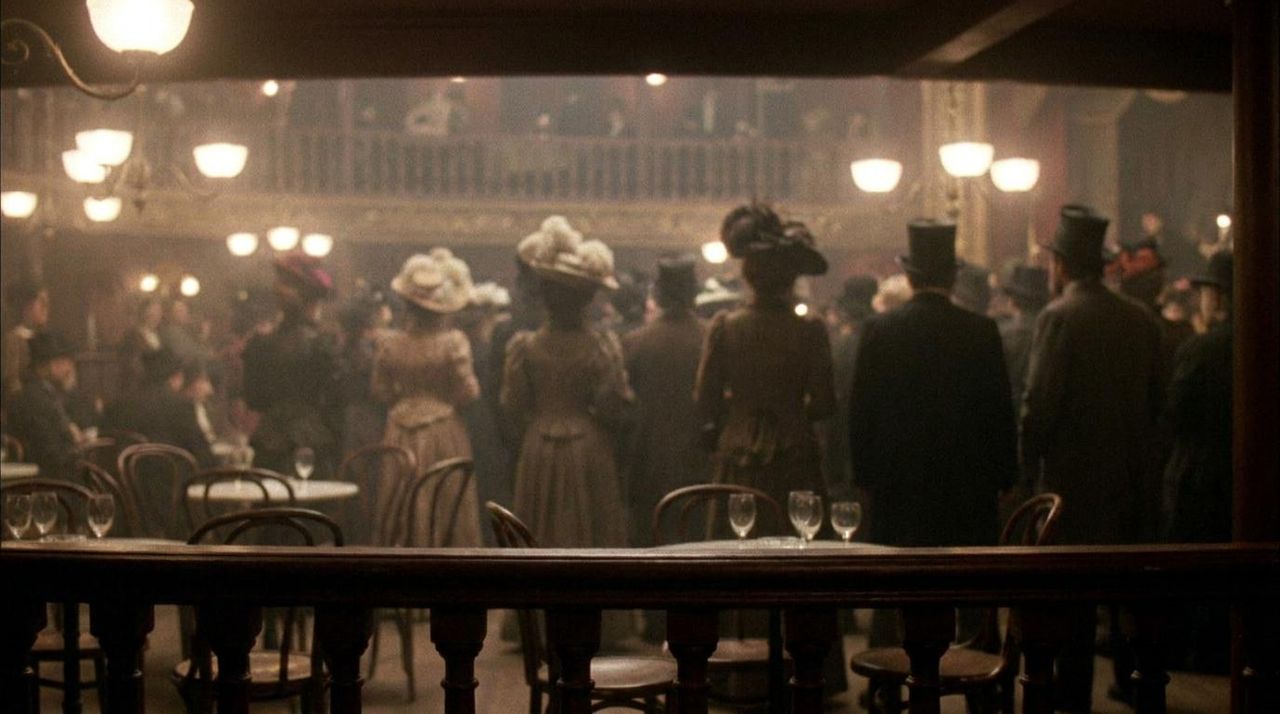
AI-generated reconstruction: a big dance hall at night with a gallery and electric lamps, small tables and bentwood chairs behind a wooden rail, and a crowd in feathered hats and top hats seen from behind.
AI-generatedThe Moulin Rouge at night, as it might have looked around 1892.

The Moulin Rouge opens in Montmartre in 1889, built for electric light. You become a regular with a table of your own, and its owner buys your Equestrienne to hang in the lobby.

In 1890 you paint its dance floor. In 1891 your first poster, Moulin Rouge: La Goulue, goes up on the walls of Paris and makes your name.

The dancers La Goulue, La Macarona and Jane Avril, the photographer Paul Sescau, the writer Édouard Dujardin: the hall's regulars are your friends and your sitters.

Choose your company

EvidenceMaurice Joyant's catalogue (1926), Heller (1986) and the Art Institute's identifications today. They do not all agree.

Set the viewer's eye level with Guibert's profile, so you look up under the brims of the hats. Cut off the corner with the diagonal rail, and let a face at the right edge be sliced by the frame.

  • At the table, from the left: Édouard Dujardin, poet and critic; La Macarona, a dancer; Paul Sescau, photographer; Maurice Guibert. These are Joyant's names.
  • With her back to you, red hair piled up: Jane Avril, according to Heller and the museum. Joyant did not name her, and Rich called her unidentified.
  • Behind them, two dancers, one fixing her hair: La Goulue and, for Heller, La Môme Fromage. Accounts differ on which is which.
  • Walking past at the back: you and your cousin, Dr Gabriel Tapié de Céleyran.
  • At the right edge: “Mlle Nelly C.” for Joyant; May Milton since the museum's 1979 catalogue.

Heller traced La Macarona's white, powdered face to your portrait of her as a jockey, published in Le Figaro illustré in February 1894: you changed the costume and kept the face.

A canvas made to look like cardboard

EvidenceHeller (1986), describing the canvas after the 1985 examination, and Gustave Coquiot (1921), who knew you. No laboratory analysis has been published.

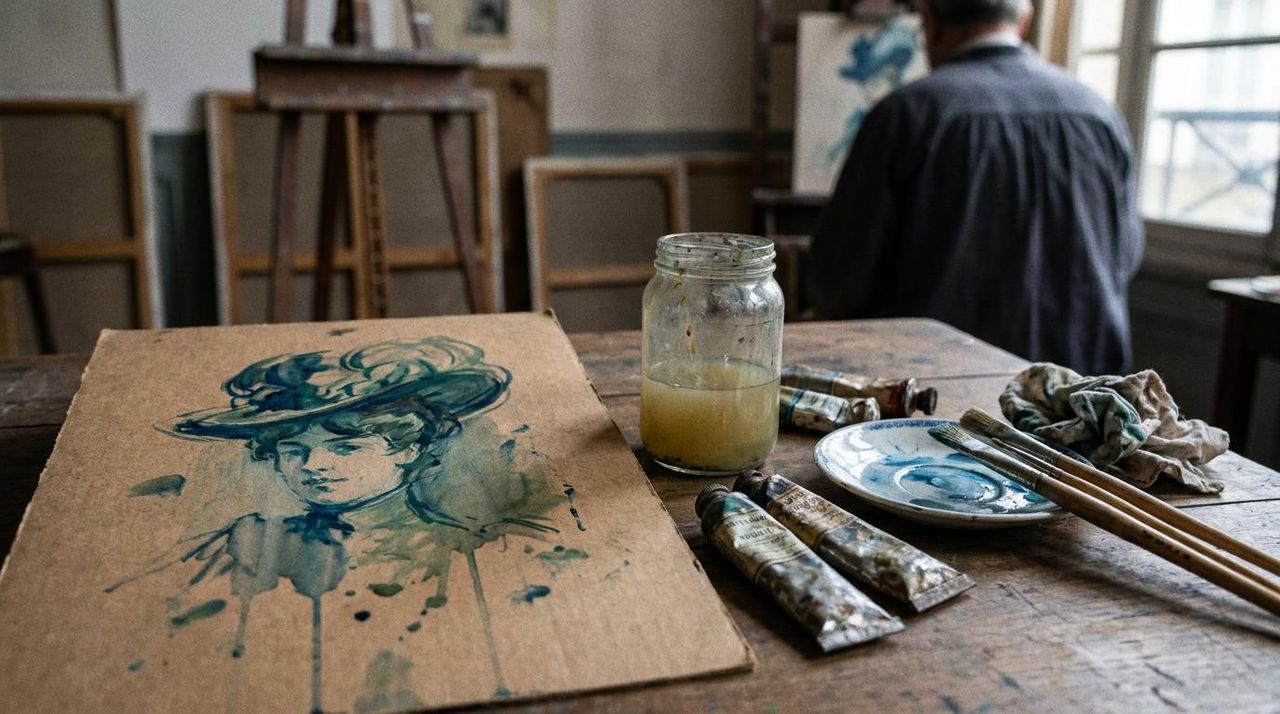
AI-generated reconstruction: a sheet of brown cardboard with a quick sketch of a woman in a large hat in thin blue and green paint, a jar of turpentine, a saucer of thinned blue paint, brushes and paint tubes.
AI-generatedPeinture à l'essence: thinned oil on cardboard, your usual way of working.

From 1890 to 1894 you almost stop painting on canvas. You work on cardboard in oil thinned with turpentine, sometimes with gouache or crayon, drawing in the thinned paint with great sureness, as Coquiot remembered.

For this picture you go back to canvas, but to a canvas primed with gesso tinted the colour of cardboard. That brownish tone is the base colour of much of the picture, and you thin your paint until it soaks into the ground. Heller noted the same tinted gesso on other canvases of 1894–96, such as The Salon in the Rue des Moulins, and suggested that painting the big canvases for La Goulue's fairground booth in 1895 brought you back to canvas.

Your lithographs shape the painting too: contour lines and large flat areas of colour. Heller called it a painting derived from lithographs, not one made to be turned into them.

No one has analysed the pigments. A list drawn from period practice would only be a guess, so this guide does not give one.

Draw with the brush, then wash

EvidenceInferred from your work on cardboard and from Rich's description of the paint. No underdrawing has been reported for this canvas.

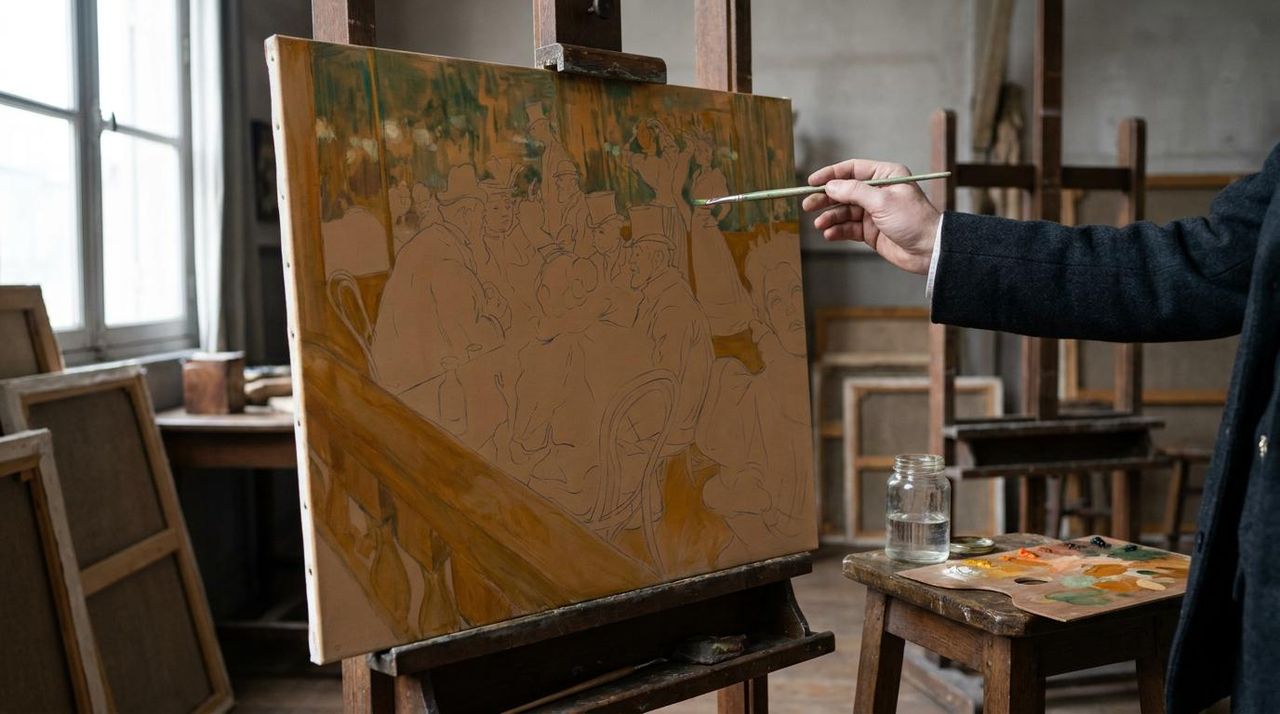
AI-generated reconstruction: an unfinished canvas with a brown ground, blue drawing and thin ochre and green washes on an easel, a hand in a dark sleeve holding a thin brush.
AI-generatedThe washes going on. The canvas is stage 3 from the slider at the top of the page.
AI reconstruction: A bare canvas with an even light-brown ground.
Tinted groundGesso the colour of cardboard. AI-generated
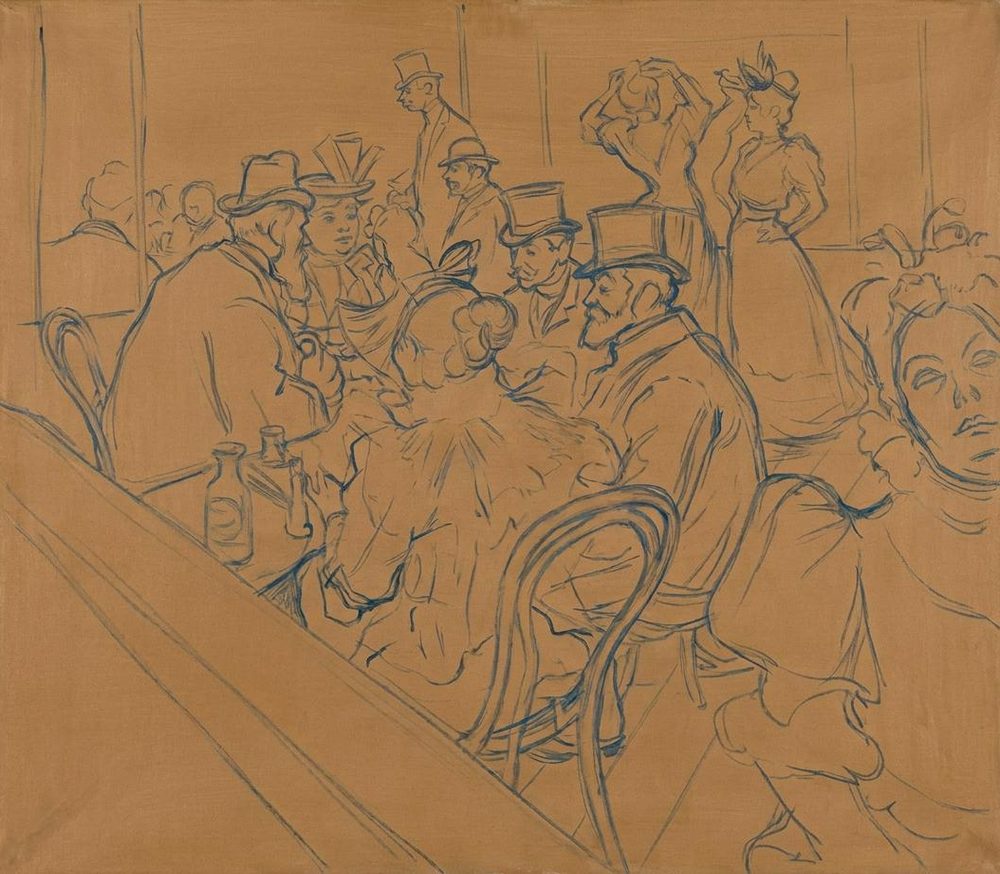
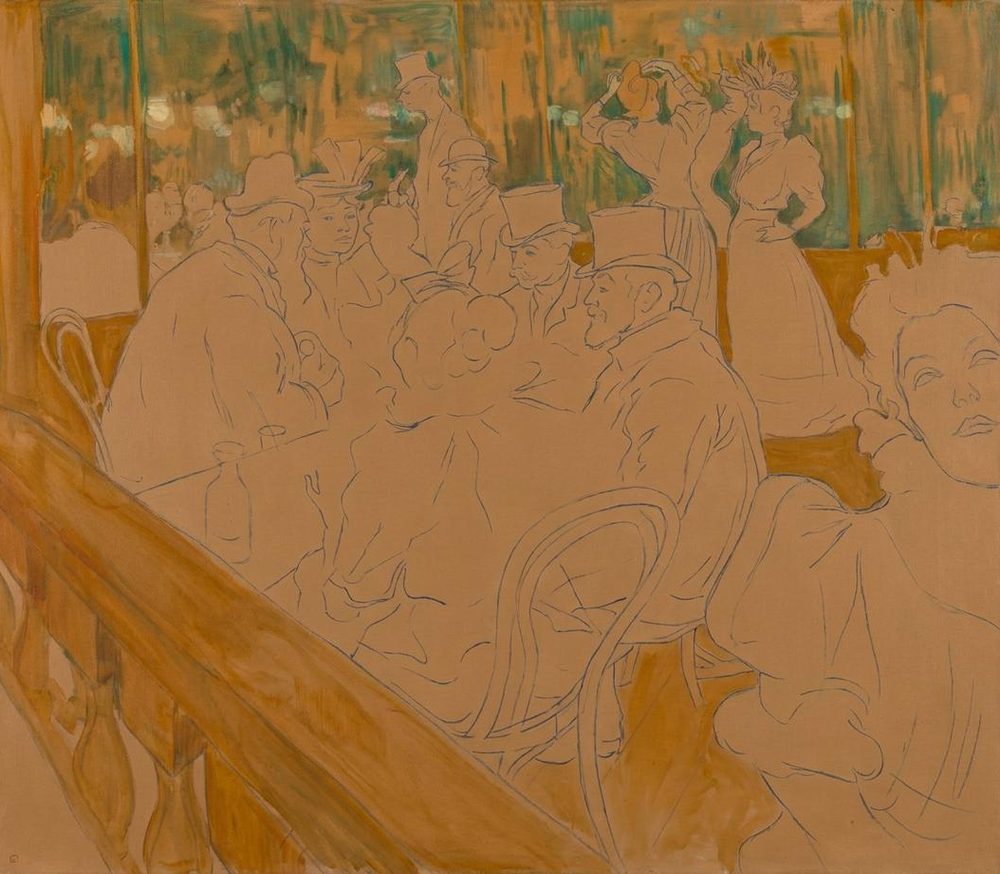
AI reconstruction: Blue brush lines on the brown ground placing the rail, table, chairs, figures and the face at right.
DrawingThin blue lines, everything placed. AI-generated
AI reconstruction: Thin ochre, orange and green washes over the setting, the figures still only drawn.
WashesFloor, rail, walls and glass. AI-generated
Generated with Prodia from the finished painting, so the composition stays in register. They show plausible stages, not scans of the real layers.
  1. Tint the ground

    Brown gesso, so the canvas behaves like the cardboard you are used to.

  2. Draw in paint

    Thin blue, turpentine-thinned, with sure lines: the rail, the table, every figure and the face at the edge.

  3. Wash in the room

    Broad washes: tan-orange for the rail, a duller tan for the floor, streaks of green and orange for the glass.

  4. Keep it thin

    Let the paint sink in and the ground show through. That soaked-in surface later helped show that the canvas had been one piece.

Paint the table, the room and the face

EvidenceRich (1949) and Heller (1986) on the handling and the figures. The order of the three steps is inferred.

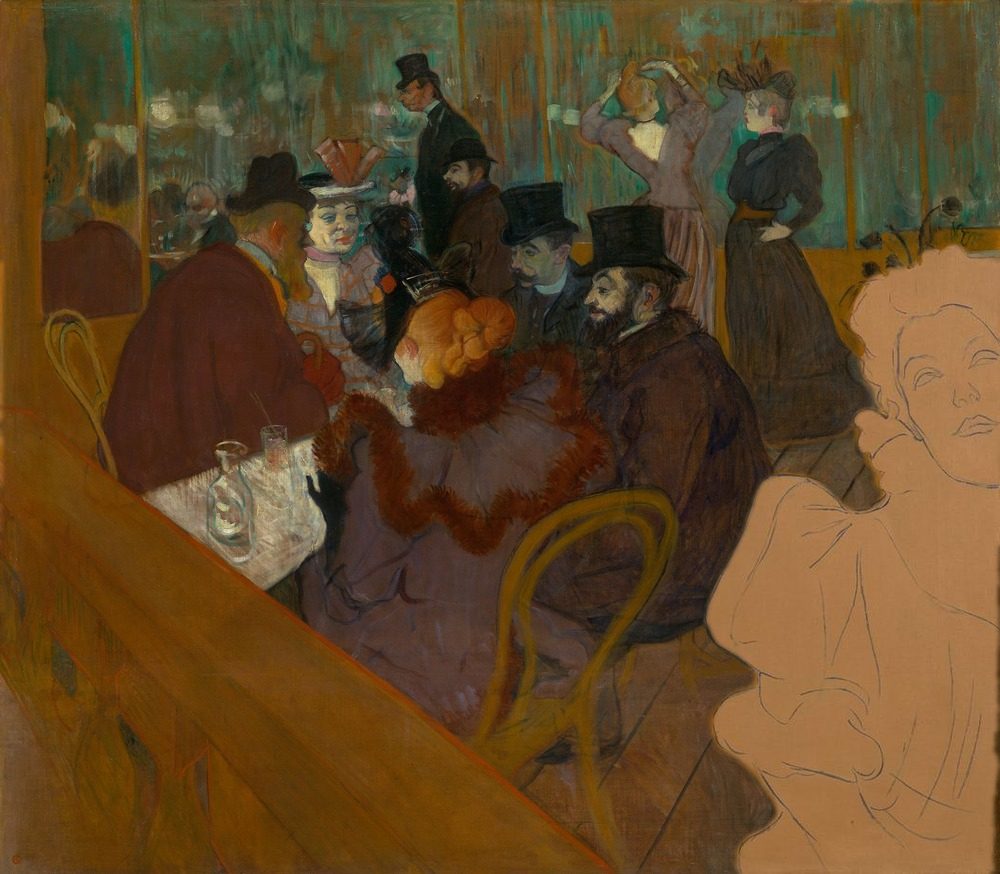
Most of the picture is in broad washes of thinned colour, with a few notes of bright orange and red, harsh greens and touches of black. How long it took you is not recorded.

1 2 3

AI-generatedAfter step 3: the face at the edge

  1. 1The table
  2. 2The room behind
  3. 3The face at the edge

The table

AI reconstruction after step 1: Dujardin, La Macarona, Sescau and Guibert, a red-haired woman seen from behind, the glasses and the bentwood chairs. The order of stages 4 to 6 is inferred.
After step 1 AI-generated
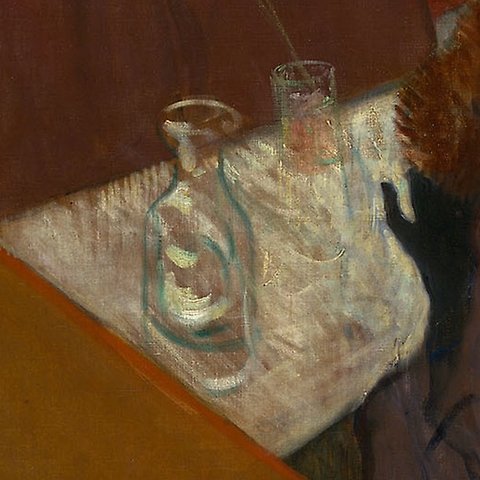
Close-up of a white tablecloth with a carafe and glasses, laid in with quick strokes.
Glasses and a carafe on the table.

Paint your friends around the table in thinned colour: reddish browns and violets for the coats and dresses, as Rich described them, a white cloth with a carafe and glasses, a few lines for the bentwood chairs.

In the middle, with her back to you, put a woman with a knot of red hair. Heller and the museum identify her as the dancer Jane Avril; Joyant did not name her.
The room behind

AI reconstruction after step 2: Two dancers behind, among them La Goulue; you and your cousin Tapié de Céleyran walking past; figures in the haze behind.
After step 2 AI-generated
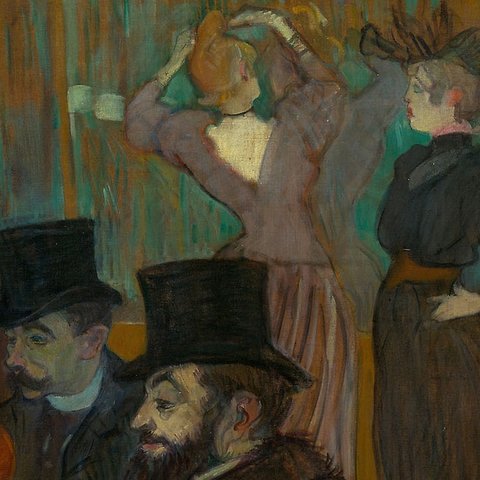
Close-up of two women standing behind the table, one with her arms raised to her red hair, the other in black with a hand on her hip.
Two dancers, one fixing her hair.

Behind the group, two dancers stand, one fixing her hair, the other with a hand on her hip. Joyant names La Goulue among them. The museum takes her to be the one fixing her hair; Rich took her to be the other, and Heller names that one La Môme Fromage.

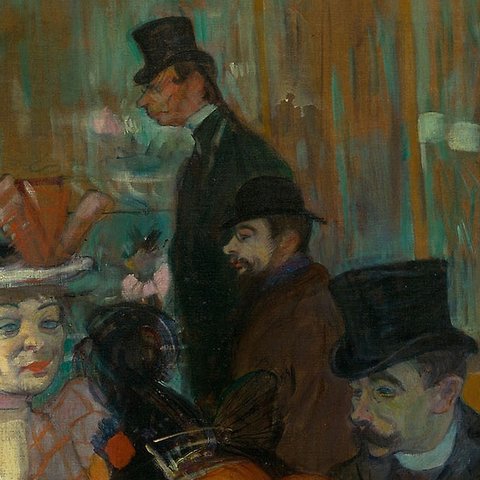
Walk yourself and your tall cousin, Dr Gabriel Tapié de Céleyran, across the back. Dash in the glass partition in broken streaks of green and orange, with a waiter and his tray, as Rich described it.

Close-up of a tall man in a top hat beside a short bearded man in a bowler, walking behind the table.
You and your cousin, walking past.

The face at the edge

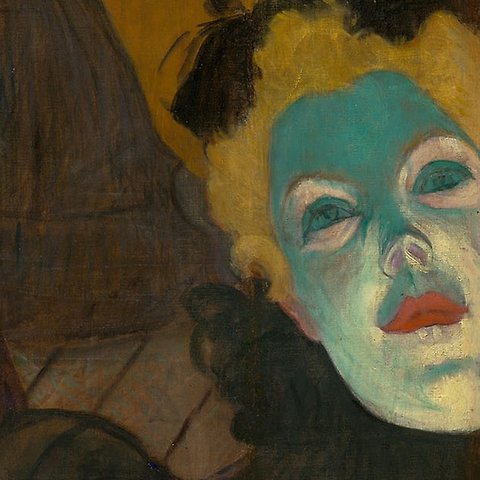
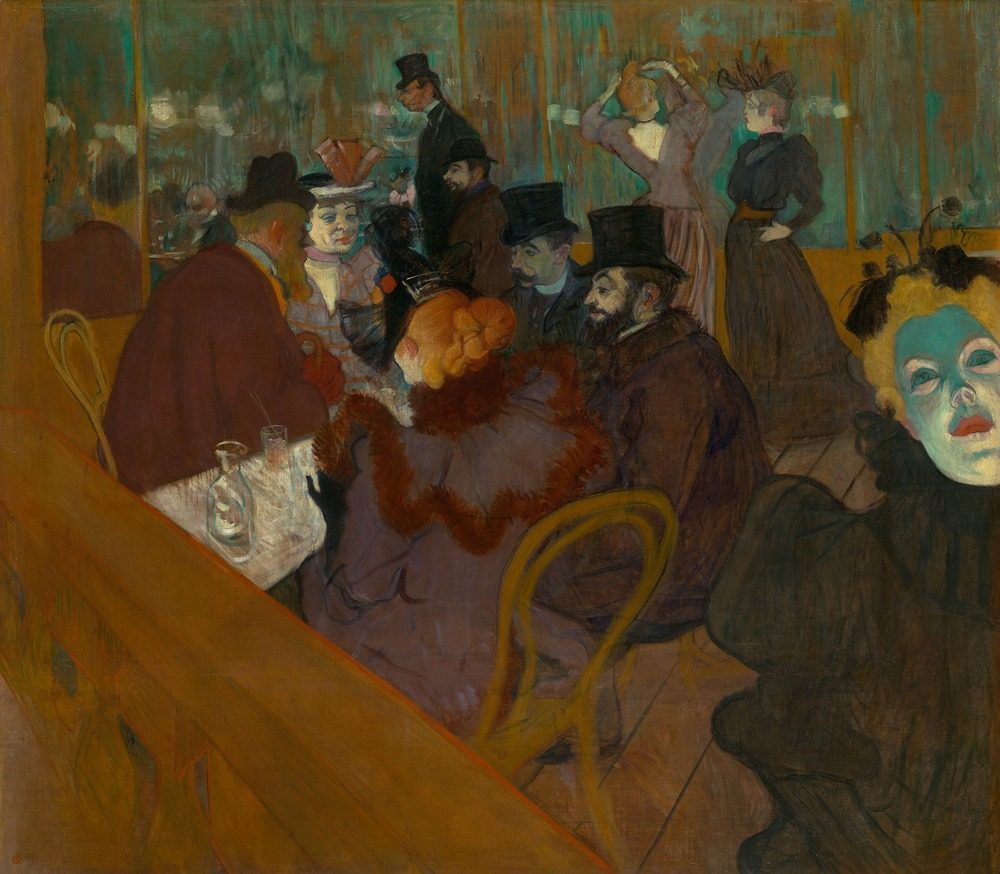
AI reconstruction after step 3: May Milton, lit acid green at the right edge. The picture as you left it, about 1895, unsigned.
After step 3 AI-generated
Close-up of a woman's face lit acid green and white, with yellow hair and a bright red mouth.
Lit acid green.

Cut a woman's face with the right edge of the canvas and paint it in green, yellow and white with a red mouth. Joyant called her “Mlle Nelly C.”; since 1979 she has been identified as May Milton, an English performer who was in Paris in 1894–95.

Heller argued that she belonged to the picture from the start. If she is May Milton, the canvas cannot be earlier than 1894.

You don't sign it. Heller thought you never meant to show it.

After you: the cut

EvidenceHeller (1986): the 1985 examination, the 1902 photograph and the estate stamp. Who ordered the cut, and why, is his argument, not a documented fact.

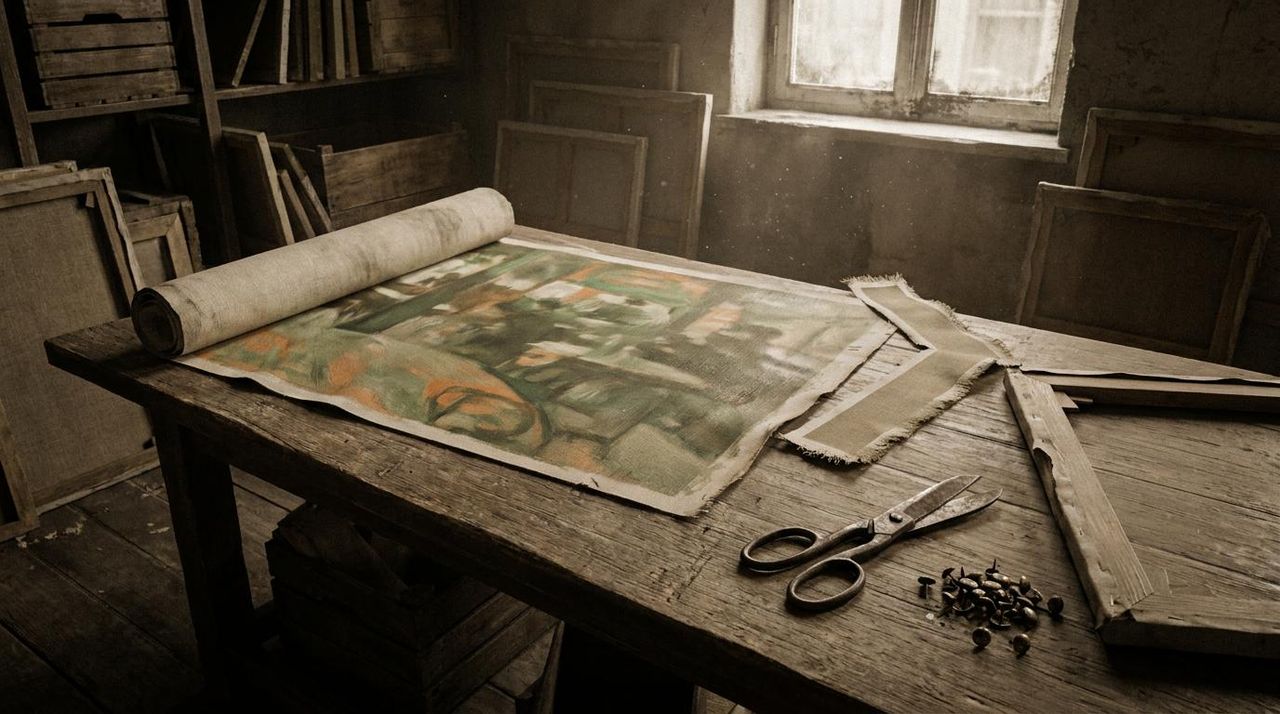
AI-generated reconstruction: a dealer's storeroom: a large unframed café painting lying on a table, an L-shaped strip cut from its side and bottom folded beside it, shears and tacks.
AI-generatedImagined: the canvas off its stretcher, the strip cut away. Who did it is not known.

You die on 9 September 1901. In 1902 Maurice Joyant, your friend, dealer and executor, marks the works in your estate with a small red stamp, your monogram in a circle; on this canvas it sits at lower left.

In April 1902 Le Figaro illustré devotes an issue to you, and prints a photograph of the painting as Une Table au Moulin Rouge. By then it has been cut. Only a rectangle of about 124 by 94 centimetres remains, with the table group, restretched with its edges folded round the stretcher. The face at the right and the strip along the bottom have been cut off in one L-shaped piece, folded and presumably stored; a paint loss still shows where it was folded. Her sleeve, left in the rectangle's corner, was evidently painted over with the ochre of the floor.

Heller's case: the estate stamp is on the cut-off piece, so the canvas was still whole when it was stamped in 1902, and was cut afterwards, “under Joyant's immediate direction”. In 1899 you had been confined in an asylum to dry out, and you were widely called insane and degenerate. The 1902 issue was, in Heller's words, “a carefully orchestrated denial” of that, and a garishly green face made a poor argument for your sanity.

The museum is more cautious: it says “the artist or his dealer” cut the canvas, perhaps because her face made the picture hard to sell.

Put back together

EvidenceHeller (1986) on the 1985 examination, Esswein's 1909 book and the 1914 exhibition; the museum's provenance. The restorer is not named.

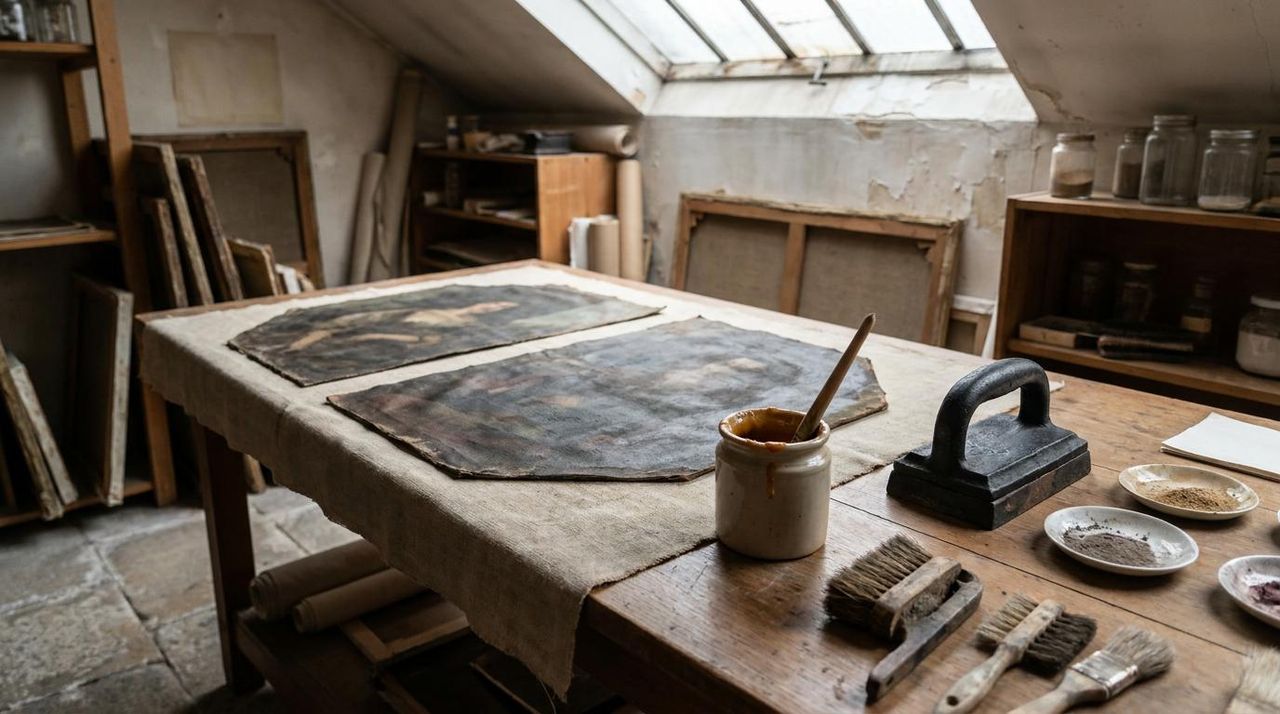
AI-generated reconstruction: a restorer's workshop: two cut pieces of a painted canvas laid side by side on a new lining canvas on a big table, with a glue pot, an iron and small brushes.
AI-generatedImagined: lining the two pieces onto a new canvas.

In 1909 the writer Hermann Esswein described the cut-down picture without illustrating it; Heller wondered whether the rejoining was already under way. By June 1914, when the Manzi-Joyant gallery held a retrospective, the painting was whole again. Two months later the Gazette des Beaux-Arts printed the first photograph of it rejoined.

The restorer laid both pieces on a new lining canvas, filled the tack holes with plaster and painted over the seams. One tacking margin had been cut off, leaving a gap, so the rectangle was shifted down about an inch to close it. That is why the edge between the ochre panelling and the green doors jumps upward behind the green-faced woman's head. Her hair and collar were altered, the two “antennae” on her hat, clear in your 1895 images of her, were restored wrongly, and flower-like shapes were added to hide the join.

The painting came to the Art Institute in 1928. For decades the museum read the story backwards: Rich, its director, thought the 1902 photograph showed your first version, enlarged by you a year later. Then, in the fall of 1985, the conservator David Kolch examined it and showed the canvas had been one piece:

  • The paint and handling match on both pieces, and there is no overpainting where an enlargement would have needed it.
  • Your thinned paint soaked into the ground; a later addition could not have matched that surface without traces.
  • X-rays show brushstrokes, for example on the bentwood chair, running from one piece into the other.
  • Heavy threads in the canvas run straight across the seam.

How Toulouse-Lautrec thought

  • Draw with the brush. Thinned paint and sure lines, the way you worked on cardboard.
  • Let the ground work. A brown ground left showing as one of the colours.
  • Think like a printmaker. Contours and flat areas of colour, carried over from your lithographs.
  • Paint the people you know. Friends, dancers, your cousin and yourself, in the hall you went to every night.
  • Crop hard. A rail across the corner and a face sliced by the frame.

Sources